
A few words on a label: “Summer 1996”, “Wedding”, “First birthday”. Years later, the most precious moments may be the ones nobody thought much about when the camera was running. Someone laughing just out of shot. The voice behind the camera. An ordinary room that no longer exists. Photographs have kept the faces; the tape may also hold the gestures, conversations and the way someone used to say our name.
Finding a box of old cassettes naturally raises a question: can we still watch any of this? That question feels more urgent when there is a pale deposit behind the cassette window, or the tapes have spent years in a damp cellar.
An old or mouldy VHS cassette does not necessarily mean the recording is lost. It may be possible to prepare the tape for playback and preserve the film as a digital file. The prospects depend on what has happened to the tape. Understanding how it ages, what mould can do and when to leave it alone can help protect a recording before another attempt to play it makes matters worse.
What has been happening inside the box?
A cassette on a shelf can look as though time has stood still. Its plastic shell may remain in good condition for decades. Inside, though, is a thin, flexible strip of tape whose condition cannot be judged by the appearance of its case.
The picture and sound are recorded in a coating containing tiny magnetic particles. A binder holds those particles to the plastic base. Over time, particularly in poor storage conditions, that coating can change in ways that affect how safely the tape moves and how well its signal can be read. Moisture encourages some forms of deterioration, while heat can speed them up. Deposits, stickiness and shedding can be signs of these changes, although tapes do not all age in the same way.
The year on the label is therefore not an expiry date. A cassette from the 1980s kept in suitable conditions may be in better shape than a much newer one left in a damp garage. IASA's guidance on magnetic media explains the importance of tape formulation, manufacture and storage. There is no sound basis for giving every VHS recording the same deadline.
Nor does the recording simply evaporate with age. Often, the difficulty is physically reading information that is still there. Alongside changes within the tape itself, there may be another problem: mould.
How mould takes hold on VHS tapes
Cellars, lofts and garages are convenient places for things we rarely use. They can be much less suitable for recordings. Fluctuating temperatures, damp boxes and long periods of high humidity can create favourable conditions for mould. A cassette does not have to have been submerged in water.
Mould can grow on the tape pack, the layers wound tightly around a reel, and reach between them. It is not necessarily just a mark on the shell. Contamination can obstruct the tape's movement and interfere with contact between the tape and the heads that read its signal. More serious cases can involve damage to the material itself. Adjacent layers may also stick together. Winding tape in this condition can tear it or strip away parts of the recording layer.
Moving the cassettes out of a damp room matters, but it does not remove the contamination. The Canadian Conservation Institute's guidance on mould treats moisture control and cleaning as separate tasks. Drier surroundings help address the conditions behind the problem; they do not make a contaminated tape ready to play.
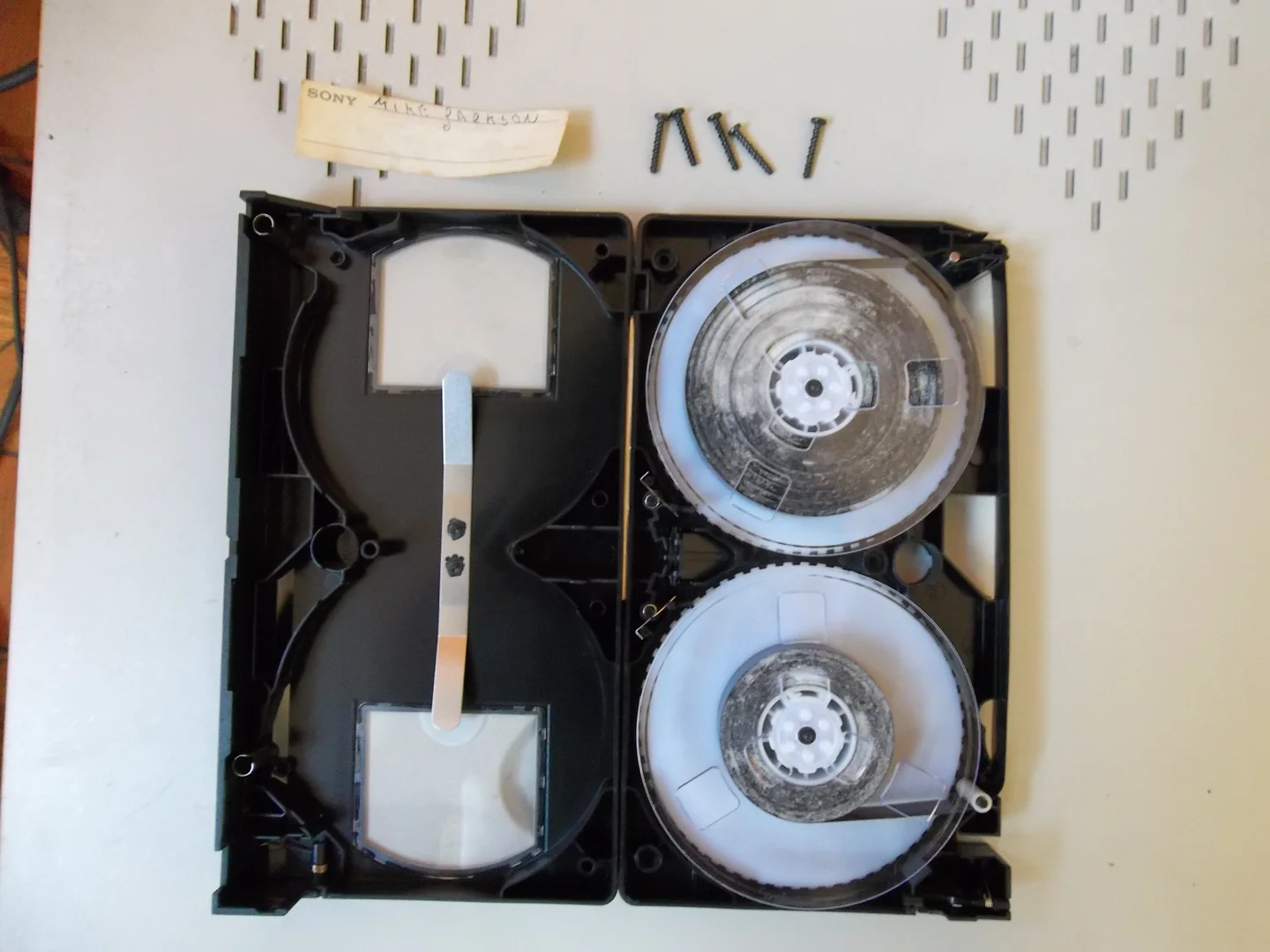

A white deposit is a reason to pause
Pale patches on a reel can make it seem as though the whole film has gone. Yet the small cassette window cannot reveal the extent of any damage, or even establish exactly what the deposit is. White particles may be mould, but they can also be residues from changes in the tape's components. The CCI guide to digitising VHS tapes explains this difficulty.
At this stage, the cassette is best kept closed and apart from the other recordings. Photographs taken through its windows can help with an assessment, along with a note of where it was stored and whether it has been wet. Bringing it close to the nose, blowing on the deposit or brushing it away will not provide a reliable diagnosis and may spread the contamination.
The important question is whether the recording layer beneath the deposit has survived. That is why a family cassette should not be discarded on appearance alone. Something preventing the signal from being read and damage to the tape itself are different problems, with different possibilities for recovery.
Why a quick test can make things worse
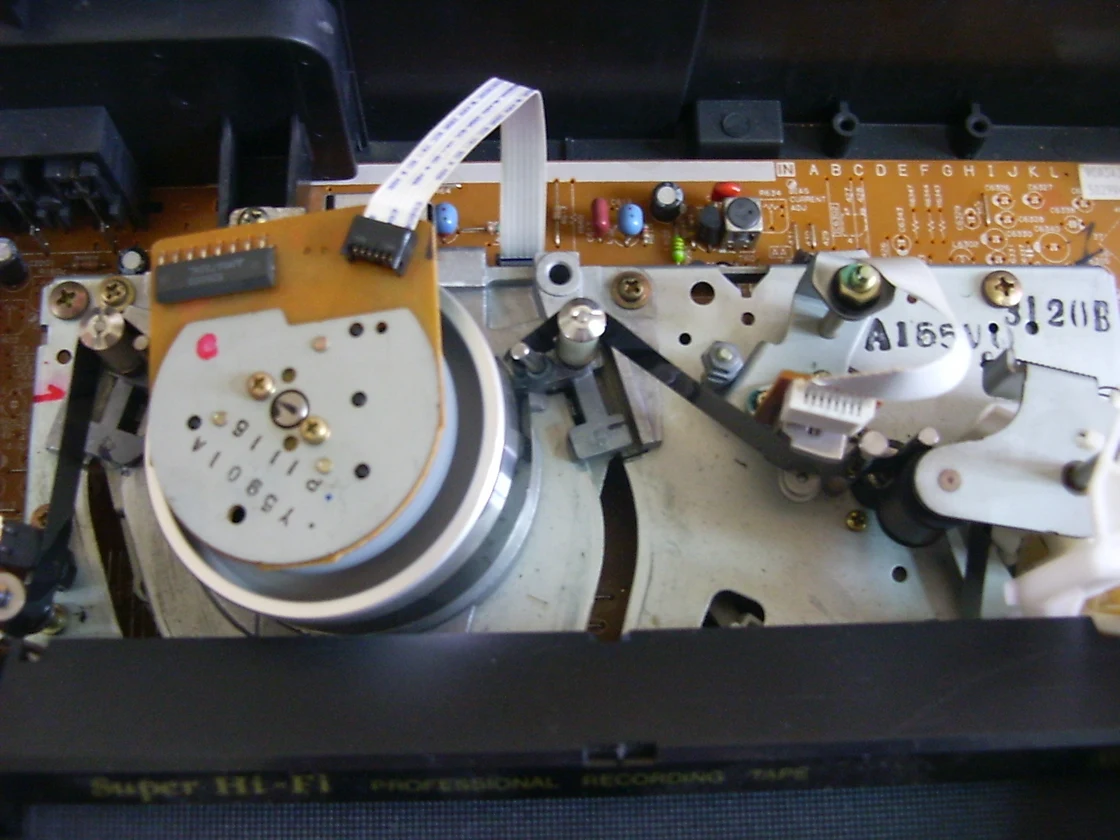
It is tempting to put the cassette in a video recorder and see whether a picture appears. But a VCR does not inspect the tape from a distance. It draws it through guides and rollers, then wraps it around a drum containing rapidly rotating heads. Deposits can remain on those parts and transfer to the next cassette.
When mould is suspected, the sensible first step is to hold off on playback. If the tape has already been played, mention this during its assessment. The VCR may also need cleaning before it is used with other recordings. A clear picture for the first minute does not establish that the rest of the tape is clean or mechanically sound.
A recorder brought out of storage after many years deserves attention too. Ageing belts, a faulty mechanism or incorrect tape alignment can damage an otherwise well-preserved recording. The only copy of a family film is too valuable to use as its first test. The guide to choosing a VCR for digitisation looks more closely at what reliable playback requires.

How cleaning can make a recording accessible again
Work on a mouldy cassette begins before any capture software is opened. The tape needs to be assessed: can it withstand movement, what needs removing, and are any layers stuck together? Those findings guide the choice of cleaning method and playback conditions. The aim is to preserve as much of the surviving recording as possible.
A separate tape-cleaning machine offers an example of this approach. The maker of VHS is LIFE explains the design and how it works. Tape travels between reels through pads that collect deposits, with an optional extraction connection intended to reduce their spread. Speed and direction are adjustable. Cleaning takes place away from the VCR's playback mechanism, before an attempt is made to read the picture.
The maker also warns that heavily mouldy tape can stick together and tear. Having a machine does not establish whether a particular tape can withstand the process. Its condition needs to be assessed first.
The Polish-language channel Stare formaty VIDEO also addresses the subject in “Spleśniałe kasety VHS - czy da się je uratować?”. The author's description introduces it as a demonstration of cleaning a cassette and preparing it for playback. For a family tape with no second copy, an online demonstration cannot replace assessment of that particular recording. The cleaning material, pressure and way the tape is moved must suit its condition. An experiment on the only copy can cost far more than a replacement cassette.
What cleaning can save, and what it cannot undo
Once an obstruction to playback has been removed, a valuable recording may be found beneath an alarming deposit. It may not be possible to recover the whole film, and quality may vary along its length. Finding mould alone is not enough to predict the outcome.
One limit is the condition of the magnetic coating. As conservators explain in the CCI's answers to questions about damaged recordings, when particles carrying the recording are lost, their information is lost with them. Cleaning cannot put it back. A cracked shell containing intact tape may therefore present a very different prospect from a pristine-looking cassette with a damaged recording layer.
Preparing a tape for playback is also distinct from restoring picture and sound afterwards. Digital processing can reduce noise, improve stability or make surviving detail easier to see. Importing a film into software does not recover destroyed sections. The first achievement is the best feasible reading of what remains; further work depends on that foundation.
Giving VHS tapes a better place to wait
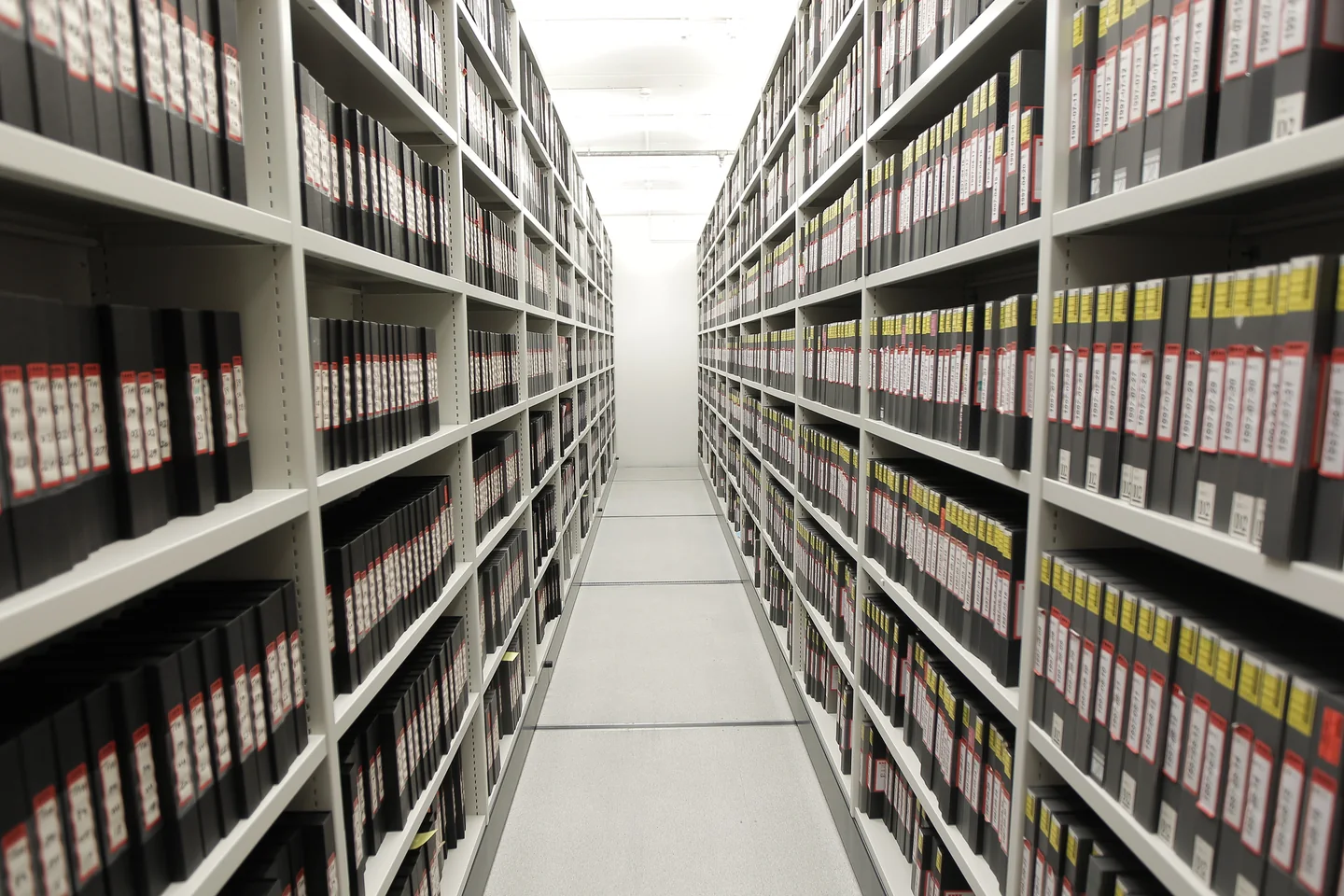
For clean, dry cassettes, there is plenty that can be done before digitisation. In an ordinary home, a suitable place will usually be a dry part of the living space, away from direct sunlight, nearby radiators and large temperature swings. Individual cases help protect against dust and accidental damage. Cassettes should stand upright on their long edge.
The Library of Congress offers similar advice for audiovisual collections. A home archive does not need to look like a professional storage facility. What matters is an environment that does not change dramatically with every cold night or hot afternoon. Moving a box from a damp cellar to a suitable cupboard can do more good than buying attractive organisers.
.jpg)
A suspect or wet cassette needs separate attention, rather than a place among unaffected tapes. Recent water damage calls for prompt specialist advice, not drying on a radiator or leaving moisture trapped in a box for months. If there is a visible deposit, agree how the cassette should be packed and handed over before sending or bringing it in.
There is no need to organise the whole family archive at once. One box, with suspect cassettes set aside for assessment, is a useful start. The only copies of important recordings deserve priority. Unlabelled tapes deserve consideration too: an empty label tells us what we do not know, not what the recording is worth.
A saved recording needs more than one home
When a cassette can be prepared for playback, digitisation makes its contents available without running the original tape through a machine every time. The guide to capturing VHS explains how the player, signal stabilisation and file capture affect this stage. For now, the key point is that a cleaned cassette should not return to the cupboard as the only copy of that family history.
The resulting file needs care as well. Once the picture and sound have been checked, copies on separate storage devices, with one in another location, help protect against loss. The US National Archives recommends this approach. A USB stick is easily lost, and one failed drive should not take every recording with it. The original is worth keeping in suitable conditions, following the specialist's storage advice if it has been contaminated.
We can help plan the next steps for a collection, including tapes whose condition causes concern. Before handing over a cassette with a visible deposit, please get in touch with a brief description of the problem. Inspection is free; any cleaning or repair needed is quoted separately and agreed before work begins. The service is available to customers throughout Poland. Further details are in the digitisation and recording restoration service information.
There is no need to wait for an anniversary or for the whole family archive to be in order. Sometimes the right place to begin is one cassette, and a voice worth hearing again.